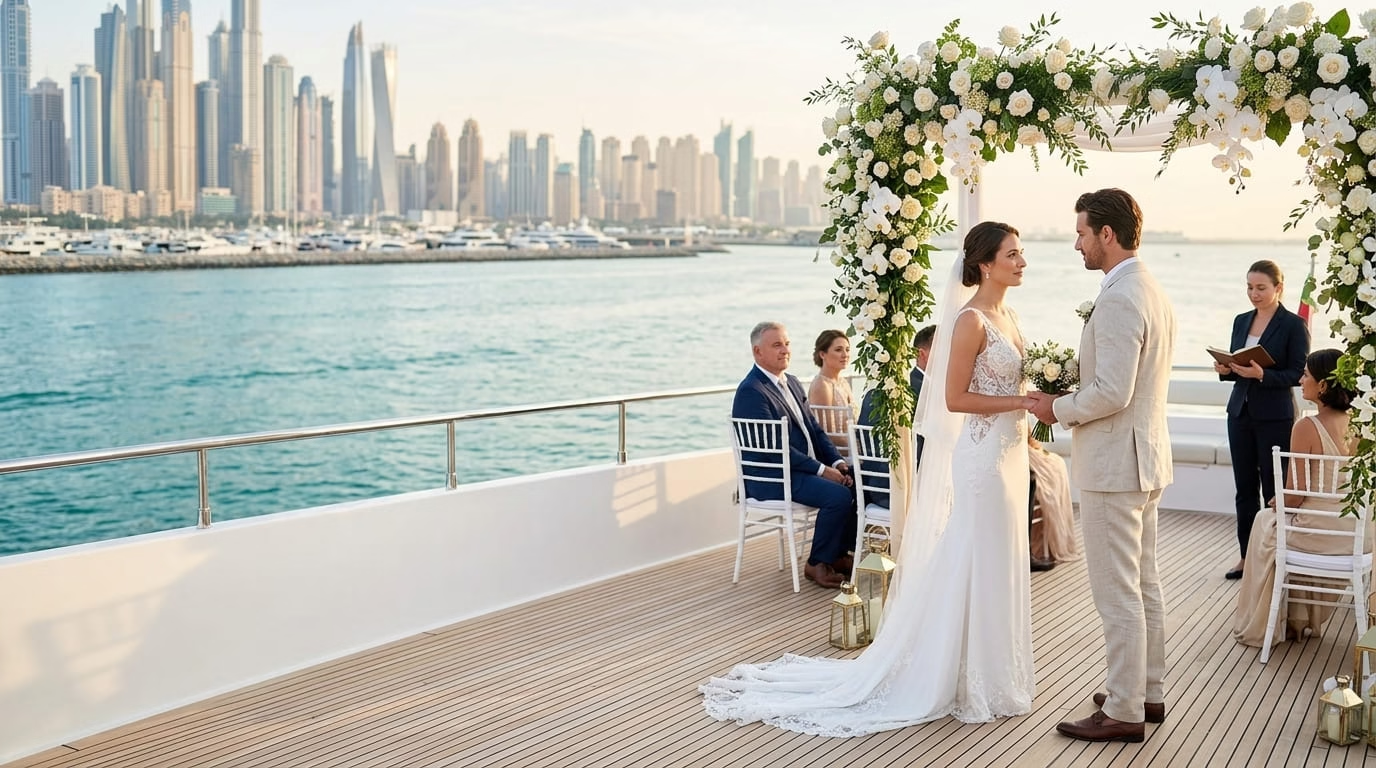
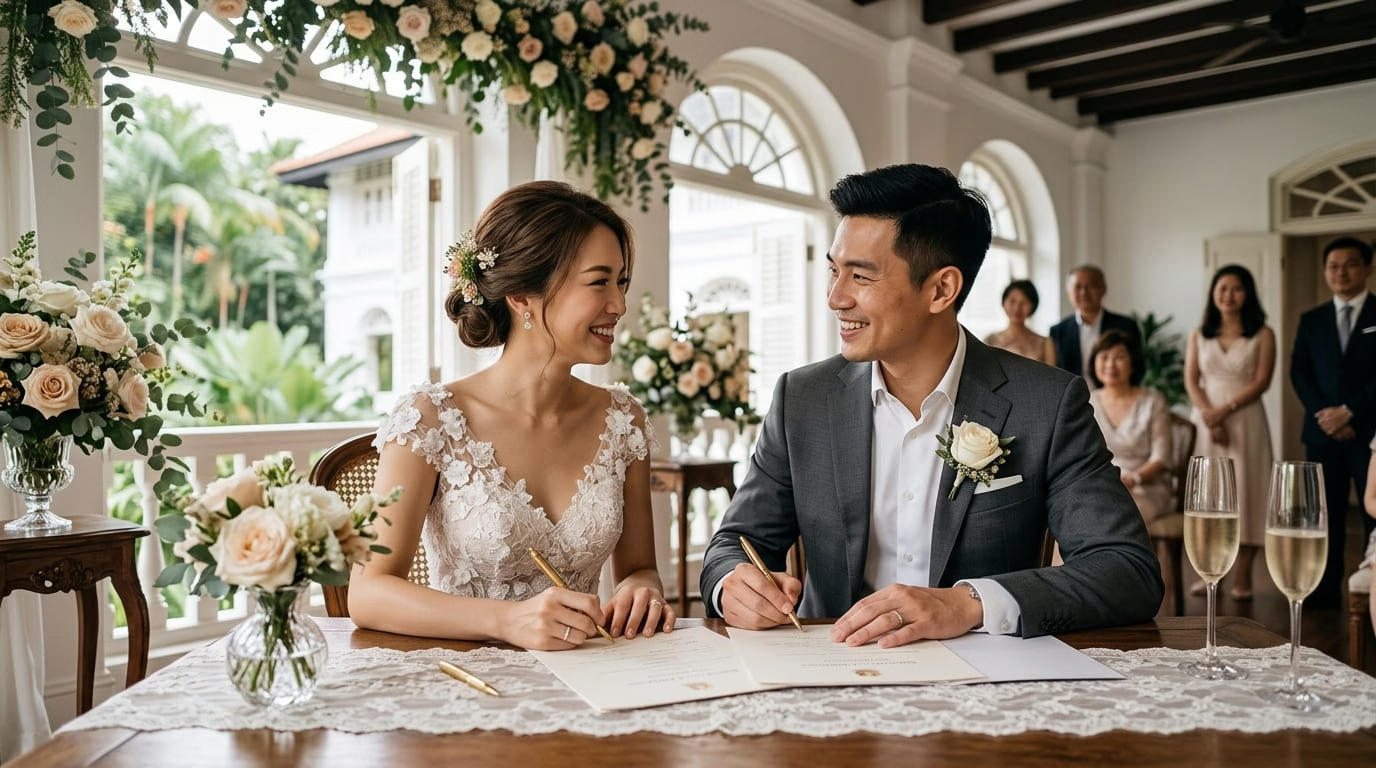
Weddings are more than just a celebration of love; they are rich with traditions that have been passed down through generations. As a Singapore wedding planner, we at Rosette Designs, invite you to join us on a journey through Southeast Asian modern wedding traditions, exploring the timeless customs of five culturally diverse countries: Indonesia, Malaysia, China, Cambodia, and Laos.
Whether you are planning your own cultural wedding or simply curious about Southeast Asian modern wedding traditions, we’ve got you covered with insights and inspiration that honor both the past and present.
1. Indonesia: A Country Rich in Traditions
With over 1,300 tribes across 17,500 islands, Indonesia offers a rich variety of traditional ceremonies. Each tribe brings unique customs to weddings ceremonies, making every celebration special.
Wedding Outfit
The bride’s ethnic background usually determines the wedding ceremony style. The wedding outfits, whether Javanese, Balinese, or of Malay heritage, include kebayas for brides and beskaps for grooms, paired with gold accessories and headpieces. Kebayas are decorated with beads, sequins, and stones, while beskaps feature matching beadwork and gold pins. Both are worn with either batik or songket fabric draped around the bottom half.
Brides wearing a hijab have elaborate headpieces styled over it, while non-hijab brides wear it over their hair. Bold makeup complements the intricate outfits.
A Singapore wedding planner can help couples incorporate these stunning Indonesian traditions into their own celebrations, from sourcing authentic kebayas to creating a Singapore traditional wedding infused with rich cultural elements.
Ceremony Duration & Traditions
Weddings last 1–3 days, with traditional rituals like Siraman (cleansing), Midodareni, and Pengajian, followed by Ijab Kabul or Solemnisation.
Receptions & Gifts
Receptions are large, often over 1,000 guests. Food arrangements include buffets and other courses are served in Gubuks (a traditional hut made from wood and bamboo). Gifts include seserahan (offerings) from the groom, and money in envelopes from guests, dropped into a sealed box.
2. Malaysia: Harmony of Culture and Faith
Wedding Outfit
Traditional Malay wedding outfits include baju kurung or Kebaya for brides and baju Melayu for grooms, often in matching colors. Brides tend to wear bold and vibrant shades like red, gold, or green, though soft pinks and pastels are also common. Outfits are beautifully detailed with embroidery, lace, and beading, reflecting the traditional Malay wedding attire.
Ceremony Duration & Traditions
A typical Malay wedding lasts 2–3 days, though some prefer to have a shorter celebration. It begins with Merisik, where the groom’s family visits the bride’s home to express interest. Meminang follows as the formal proposal, confirming the engagement date and duit hantaran (dowry gifts). The Adat Bertunang ceremony includes a ring exchange and the giving of tray-gifts. The highlight is the Akad Nikah or Solemnisation Ceremony, the official religious rite, usually held at the bride’s home or a nearby mosque.
Receptions & Gifts
The wedding reception, known as Majlis Bersanding, is the grand celebration. It can be hosted at the bride’s or groom’s home, or in a hotel or community hall to include more guests. For Malaysian wedding gifts, consider a mix of traditional and practical items. Cash, kitchen appliances, and personalized gifts are popular choices.
3. Cambodia: A Blend of Spirituality and Celebration
Wedding Outfit
In a traditional Cambodian wedding, the bride and groom often wear several beautifully detailed outfits throughout the celebration. Khmer bridal attire is known for its vibrant colors, elegant draping, and ornate accessories. It’s common for brides to change outfits multiple times, sometimes up to seven times each, symbolizing different aspects of the marriage journey. Grooms also wear traditional sets to match.
Ceremony Duration & Traditions
Traditional weddings in Cambodia used to span 2–3 days, with multiple Khmer wedding ceremonies throughout. However, modern weddings are often condensed into a single day for simplicity and convenience.
Key rituals in a Khmer wedding include the Dowry Ceremony, Monk’s Blessing (Soat Mun), Honoring the Parents (Bang Chhat Madaiy), Groom’s Processional (Hai Goan Gomloh), Honoring the Ancestors (Sien Doan Taa), Passing of Blessings (Bongvul Prompel), and the symbolic Knot-Tying Ceremony (Chorng Dai). Each ceremony is rich with meaning, often involving music, prayers, and blessings from elders.
A unique tradition is the groom’s sword, symbolizing his loyalty and protection toward his bride.
Receptions & Gifts
Instead of tangible or household items, most guests give money in envelopes. The wedding witnesses record each guest’s contribution in a notebook. Later, if the couple attends the wedding of a guest who previously gifted them money, they return the same amount as a reciprocal gesture.
4. Laos: Soulful Traditions and Joyful Celebrations
Wedding Outfit
A traditional Laotian wedding often blends old and new. Brides wear a red and gold Lao silk sinh (traditional skirt), a silk blouse, and gold jewelry. Grooms typically wear a matching silk salong (wide-legged pants). These colors symbolize love and prosperity. Bridesmaids and groomsmen usually dress in traditional attire too, with sinh, salong, and silk sashes.
Image by asian-tales.com
Ceremony Duration & Traditions
It usually lasts about a day and half. Couples often select rituals that reflect their values.
The Baci ceremony is one of the most important. It’s a spiritual blessing where elders tie white cotton strings around the couple’s wrists and offer prayers. The couple may also perform the egg ritual, feeding each other a shared egg to represent their new life together.
The Khan Maak follows, where the groom and his party bring symbolic offerings like betel nuts, fruits, and sweets to the bride’s family, representing goodwill and prosperity.
Reception and Gifts
Evening receptions are lively, featuring traditional mor lam music, lamvong circle dancing, and delicious Lao dishes like larb, sticky rice, and grilled fish. Guests usually bring cash gifts in envelopes, a traditional gesture of support and well-wishing.
5. China: Honoring Heritage Through Rituals
Wedding Outfit
Many Singapore weddings are now embracing their Chinese heritage by adopting their traditional wedding attire and customs. Traditional Chinese wedding attire reflects cultural heritage and symbolism. Brides typically wear a red qipao (cheongsam) or a two-piece qun kwa, often adorned with gold embroidery, phoenix motifs, and paired with gold jewelry or a red veil (honggaitou) for good luck.
Grooms may choose a Tang suit, the Qing Dynasty-inspired Chang Pao Ma Gua, or the more modern Zhongshan suit, which blends Western tailoring with Eastern details. Each outfit honors tradition while celebrating the couple’s union and family harmony.
Ceremony Duration & Traditions
A modern Chinese wedding lasts one full day, while traditional ceremonies can extend to two or three days. In a traditional Chinese wedding, the date is carefully chosen based on zodiac signs and the lunar calendar.
The groom presents Pin Jin, a dowry symbolizing respect, to the bride’s family, followed by returning gifts like gold or cakes. The Chinese comb ceremony, held the night before the wedding, marks the bride’s transition to adulthood. Friends and family gather as blessings and sticky rice balls are shared. On the wedding day, the couple serves tea to elders in the Chinese tea ceremony, receiving red envelopes and gifts in return, symbolizing love, unity, and acceptance into the family.
Reception and Gifts
A Chinese wedding reception, also known as a banquet, is a lavish, multi-course feast that is a key part of the wedding celebration. In Chinese wedding traditions, guests typically give red envelopes (angpao) filled with money as a gift to the couple.
Weddings in Indonesia, Malaysia, China, Cambodia, and Laos are more than just celebrations; they’re a reflection of culture, family, and tradition. At Rosette Designs, we truly understand how meaningful it is to honour these customs. With years of experience as a top Singapore wedding planner, planning both modern and traditional weddings, we specialise in bringing Southeast Asian modern wedding traditions to life in a way that feels authentic and elegant. Whether you’re blending traditions or going fully traditional, our team is ready to make your special day personal, beautiful, and truly unforgettable.
Recommended Articles: